Subscripe to be the first to know about our updates!
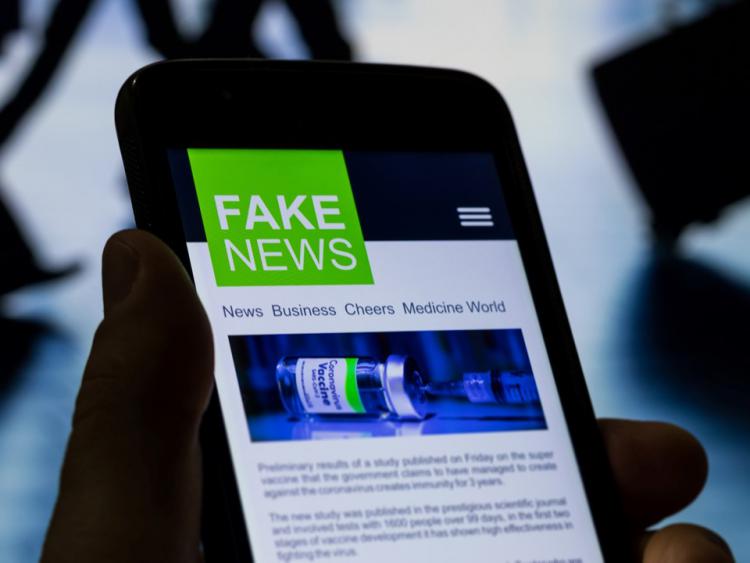
Building Immunity to Disinformation
Date & time :
Wednesday, 20 January 2021
Today vaccines are the answer to the challenges posed by the COVID-19 pandemic, which had negatively affected social and economic life across the globe.
Vaccinations are one of the greatest successes in public health(link is external). We read about diseases like smallpox(link is external) in history books, rather than news websites, precisely because of vaccines, which helped to eradicate them.
However, since the beginning of the pandemic there has been a huge volume of misleading information and blatant conspiracy theories about the vaccines. In fact, the “vaccine scare” has been present in the undergrowth of information space for quite some time, successfully exploited by disinformation actors, state and non-state.
In 2018 the American Journal of Public Health published the findings of a research, indicating that over 93 percent of messages about vaccines posted on Twitter between 2014 and 2017 came from malicious accounts(link is external). Those malicious accounts, some of which were linked to the infamous “troll factory(link is external)” based in St. Petersburg, Russia, tweeted both pro- and anti-vaccine messages to sow discord and confusion and undermine public trust in vaccination.
The global pandemic, accompanied by what the World Health Organization called an “infodemic(link is external)”, fuelled the spread of anti-vaccination disinformation. Indeed, vaccines, and in general health-related issues, provide a fertile ground for all sorts of disinformation. These are highly complex topics that encourage us to seek new information (especially so at times when little was known about the novel coronavirus), and at the same time are likely to evoke emotions of curiosity, fear, anxiety, and concern. Past research(link is external) has shown, that a mix of “novelty” and emotions help falsehoods to spread nearly 6 times faster(link is external) than the truth.
That is why multiple disinformation actors, including foreign states, find anti-vaccination messages so attractive. They can be used as a wedge issue to sow discord, exacerbate fear and social polarisation and above all, to undermine trust in health and public authorities, in science and media and in each other.
” that make them more believable and more difficult to call out. For example, to discredit one of the COVID-19 vaccine producers, Russian state-controlled media took a part of a truth, namely, that their vaccine was developed using a chimpanzee viral vector, and rebranded it as “the monkey vaccine(link is external)”. Such a moniker aimed not only to mock the vaccine producer, but also to tap into fears about the safety and “purity” of the vaccine.
What can you do?
Just like vaccines can provide immunity to viruses, including COVID-19, we can build immunity to disinformation. And we can do it ourselves. Hygiene, such as frequent hand-washing, helps to protect us from COVID-19. In the same manner, information hygiene can slow down the spread of harmful misleading information, especially on the social media.
To practise information hygiene – pause, and think before you share(link is external) or engage with the content online. Ask yourself:
- Is this content reliable? News is often rather dull, except on rare occasions like when two guys rescued a dog from icy water and it turned out to be a wolf(link is external)! If the content makes you agitated pause and make sure to check: has anyone else reported it? How do you know this is true? Pay attention to how images, emojis, headlines are used – are they trying to evoke a particular emotion in you? And remember, a high number of followers does not necessarily mean a social media account is a reliable source!
- Who is the author of this message? Can you find any of their previous work? As well-respected journalists and experts always have a track record, that is easy to find. A Facebook friend is not necessarily an expert in a given matter, and if you come across an expert, make sure their expertise is in relevant field.
- What is the source of the claims? Disinformation actors often conjure false anonymous “insider” sources, which may not even exist! (The most notable example of this is the so-called Q-anon conspiracy(link is external)). Be particularly vigilant, if those anonymous sources make general claims, that are impossible to verify. Statements like “everything is connected”; “nothing is as it seems”; “they don’t want you to know the truth”; “there’s a secret agenda” – are serious red-flags for disinformation. In case of vaccines, disinformation actors often use terms like “Big Pharma” and “Mainstream media” in a derogative way, to undermine trust in vaccine producers and journalists.
- Is this information outlet reliable? Credible, professional media don’t indulge in conspiracy theories and keep one-sided opinions where they belong: in the op-eds. Reputable journalism follows defined industry standards: an article should have more than one source and represent competing views to present a balanced account of a given issue. If in doubt, take a look at the About and Contacts section of the outlet. If it is indeed is a reliable news outlet, you should find the list of journalists working there and transparent information about the organisation and its financing.