Subscripe to be the first to know about our updates!
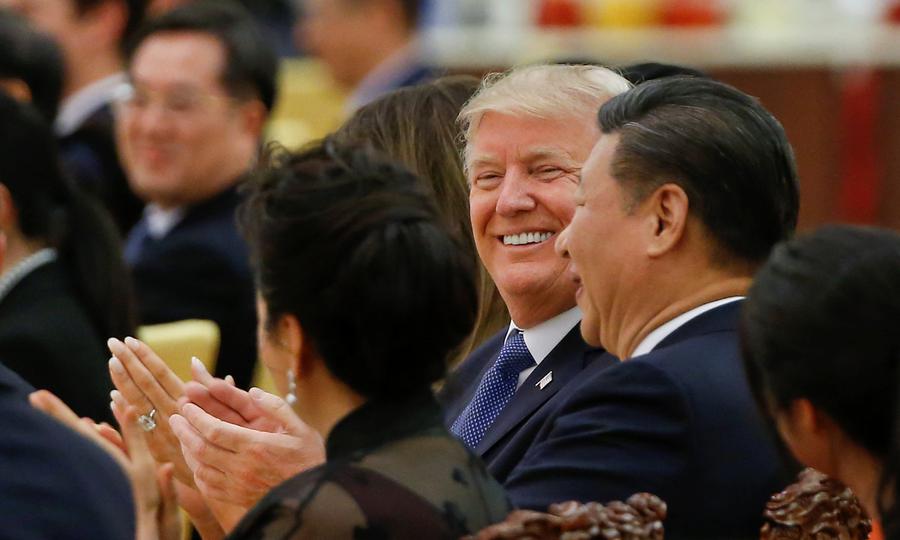
Trump’s Asia Policy: Uncertainty and Complexity
Date & time :
Tuesday, 15 October 2019
Behzard Abdollahpur
Since the remarkable growth of China and some other emerging economic powers such as India, Indonesia and Vietnam, US presidents have devoted special attention to Asia. Barack Obama, for instance, put forth his “Pivot to Asia,” which was a strategic change from the previous focus on the Middle East and Europe. But as it turned out, it sought to increase US presence in Asia in order to promote its economic and strategic interests, which merely fueled Chinese fears of American containment.
Similarly, Donald Trump proposed his “Free and Open Indo-Pacific Strategy,” which is the extension and descendant of Obama’s Pivot to Asia. So it should not come as a surprise that many scholars perceive that both US strategies have been a source of tension in Asia, since they focused on containing China and pushed regional countries to take a side between Washington and Beijing.
On some level, Trump’s Asia policy is the continuation of earlier presidents’ strategies toward Asian countries, that is, establishing and deepening US ties and bolstering America’s strategic position in the region to minimize the rise of China. In fact Trump’s Asia policy revolves around three major issues: US-China trade, US-North Korea nuclear and missile diplomacy, and the influence of the US Indo-Pacific Strategy in the region.
US-China trade
Since Trump assumed power in the White House, imposing several tariffs on China has been used as a tool of negotiation, which adversely influences US-China economic ties. He went a step further and waged a trade war with China, so we have witnessed tit-for tat policies of imposing tariffs on agricultural and industrial products from by great economic powers. In fact Trump’s use of tariffs is part of a larger protectionist strategy to narrow its trade deficit with China.
Given the existence of deep economic ties between US and China, it is very likely that their economies will enter severe recessions. Since the imposition of tariffs, both the US and China have seen them take a major toll on their economic growth. The Chinese economy has faced a significant slowdown, while American farmers companies and consumers encountered considerable difficulties.
Some scholars believe that Trump’s trade war will provide the US economy an opportunity to wean itself off its dependence on trade with China and open its markets to European, Southeast Asian and Latin American countries. However, this patchwork strategy cannot offset the losses incurred by trade war.
US-North Korea diplomacy
Since its withdrawal from the Treaty on the Non-Proliferation of Nuclear Weapon (NPT) in January 2003, North Korea has conducted several nuclear and missile tests that have been a matter of concern to the US and its allies in Asia. Trump went to great lengths to bring Kim Jong Un to the negotiation table and his diplomatic activity led to an unprecedented bilateral summit between the two leaders on June 12, 2018, in which Kim suggested some signals of “full denuclearization of the Korean Peninsula.” However, since that time, Washington and Pyongyang have had several meeting with each other that ended in failure and didn’t live up to the expectations of both sides.
Now the question arises of why the US and North Korea cannot resolve their differences on nuclear and missile issues. First, Trump’s unpredictable foreign policies, his withdrawal from international treaties and the existence of diplomatic alienation toward some revolutionary states such as China, Iran and Cuba over the past decades prevent Kim from establishing bilateral relations with the US based on trust.
Source; Asia Times