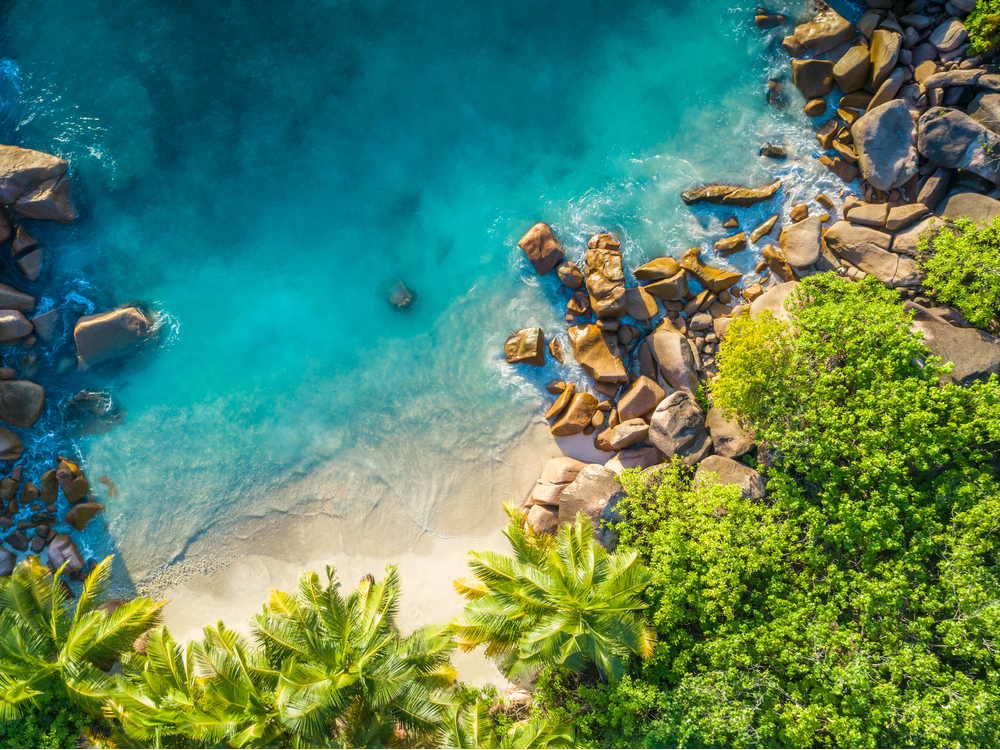
Located around 1,600 kilometres (994 miles) off the coast of East Africa, the Seychelles is an ecological paradise. The archipelago of 115 lush and rocky islands sits amongst vast swathes of ocean, covering some 1.35 million square kilometres (521,000 square miles). They’re home to some of the world’s last pristine coral reefs and are teeming with endangered species, including the southern fin whale and the Indian Ocean’s only dugongs – large marine mammals also known as “sea cows”.
But the island nation has had its fair share of problems.
The Seychelles has one of the smallest GDPs in the world and fewer than 100,000 residents, whose livelihoods rely heavily on marine tourism and fishing revenue. After years of borrowing, in 2008 the Seychelles defaulted on payments for its $406m (£311.6m) national debt and had to be bailed out by the International Monetary Fund.
At the same time, plastic pollution, climate change and overfishing threaten to deliver a catastrophic blow to the nation’s marine ecosystem, which sustains more than two-thirds of the local economy. After a mass bleaching event in 1998, in some areas, the Seychelles’ has already lost up to 90% of its coral reefs. The nation is also extremely vulnerable to flooding and coastal erosion.
In a bid to build climate resilience and boost its blue economy, the Seychelles signed a unique deal in 2015: almost $22m (£16.8m) of its national debt was written off, in exchange for the country doing more to protect its oceans. The “debt for nature” swap involved the US conservation group The Nature Conservancy (TNC) buying the debt, in exchange for a promise to create 13 new marine protected areas (MPAs).
In the five years since, the Seychelles has progressed from protecting 0.04% to 30% of its national waters, covering 410,000 square kilometres (158,000 square miles) of ocean – an area larger than Germany. Fishing, oil exploration and other marine development has been banned or severely restricted in the MPAs. Anyone who carries out illegal activities in these areas faces a hefty fine, or, in some cases, imprisonment.