Subscripe to be the first to know about our updates!
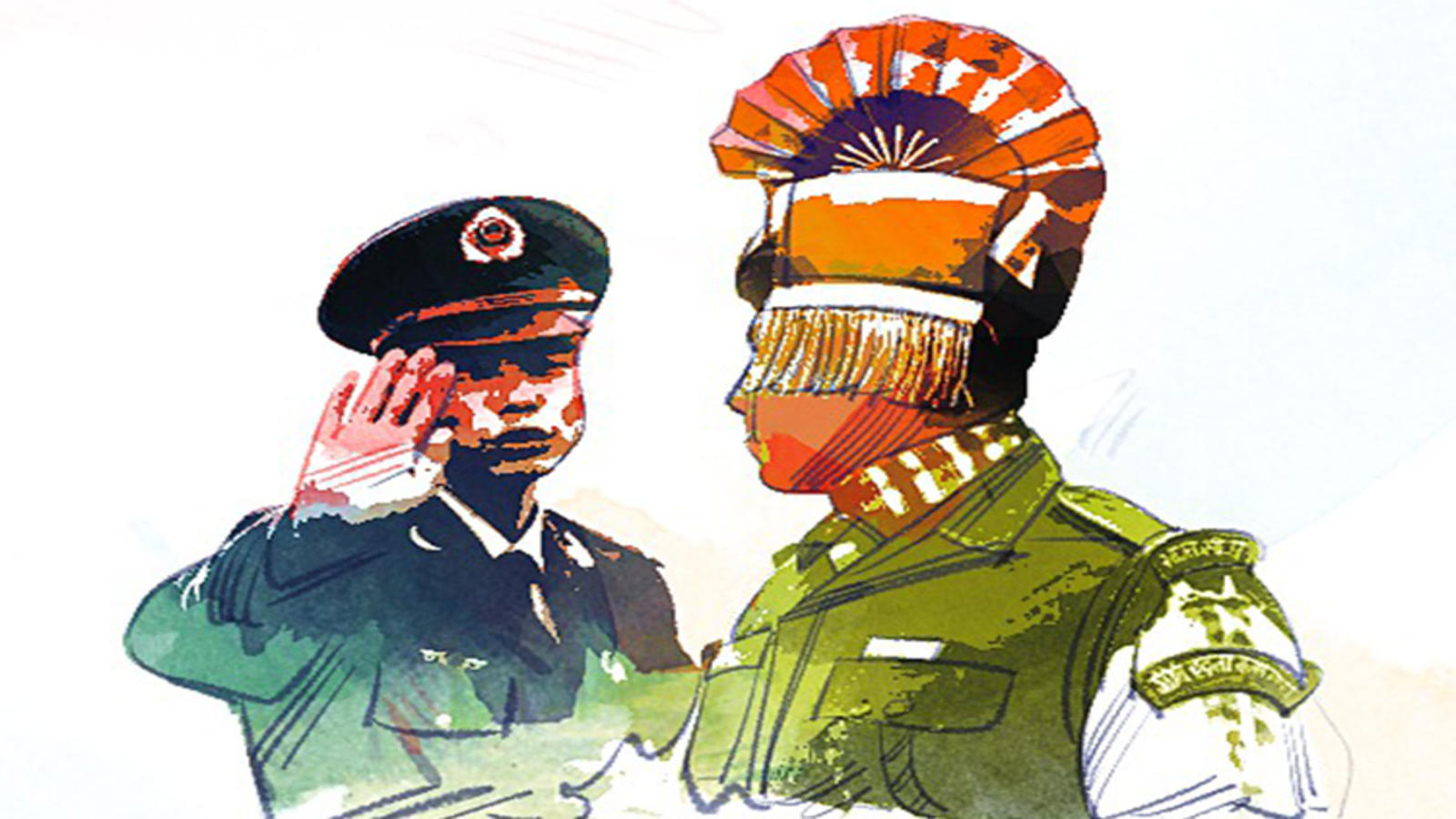
Sino-Indian Face-Off: ‘Mutual Security’?
Date & time :
Tuesday, 23 June 2020
PS Suryanarayana
The latest confrontation between China and India in the western sector of their disputed frontier has turned violent. Both countries officially reported casualties during the de-escalation phase. However, China’s earlier announcement of an agreement to “ameliorate the border situation” had raised hopes of some stability in this year of Sino-Indian ‘celebration’ of seven decades of diplomacy.
Military tensions between China and India soared in May and June 2020, ironically amid the ongoing global crisis over the novel coronavirus disease (COVID-19). The strategic causes of this latest brinkmanship remain shrouded. Civilian and military officials of the two countries appeared to have brought the crisis under control by 6 June. Yet, this diplomatic gain was marred by India’s and China’s separate official confirmations of casualties during de-escalation on 15 June.
Blaming China, India said “both sides suffered casualties” in the clash in the Galwan Valley in the disputed Aksai-Chin-Ladakh area, along their de facto boundary in the Himalayas. The Indian army said 20 Indian soldiers have died. China, on the other hand, said Indian action “caused violent physical clashes between the two sides and casualties”. These were the first reported “casualties” in Sino-Indian border tensions in several decades.
Crisis Amid Celebration
Overall, though, it was encouraging when China said on 10 June 2020 that “the two sides are taking actions in line with the agreement to ameliorate the border situation”. It was clear then that Beijing and Delhi had either achieved their unstated objectives or simply wanted to look redeemed in the COVID-era. Either way, hopes of some stability in Sino-Indian relations were kindled on that day.
This year marks the ‘celebration’ of the 70th anniversary of the establishment of Sino-Indian diplomatic relations. In seven decades, China and India enunciated the inter-state norm of peaceful coexistence in 1954, fought a war in 1962, and gradually tried to remain engaged intensively. Yet, they have not so far settled their boundary dispute, a legacy of history, despite their Special Representatives holding 22 rounds of negotiations.
Crisis Amid Celebration
Overall, though, it was encouraging when China said on 10 June 2020 that “the two sides are taking actions in line with the agreement to ameliorate the border situation”. It was clear then that Beijing and Delhi had either achieved their unstated objectives or simply wanted to look redeemed in the COVID-era. Either way, hopes of some stability in Sino-Indian relations were kindled on that day.
This year marks the ‘celebration’ of the 70th anniversary of the establishment of Sino-Indian diplomatic relations. In seven decades, China and India enunciated the inter-state norm of peaceful coexistence in 1954, fought a war in 1962, and gradually tried to remain engaged intensively. Yet, they have not so far settled their boundary dispute, a legacy of history, despite their Special Representatives holding 22 rounds of negotiations.
In brief, the Xi-Modi consensus was to take steps to maintain tranquility along the LAC and manage Sino-Indian differences without allowing them to become intractable disputes. Peace and tranquility along the disputed Sino-Indian boundary were agreed upon as the baseline requirements for improved bilateral relations.
New Ground Reality
It is paradoxical that the Xi-Modi consensus did not prevent Chinese and Indian troops from seeking to disrupt peace and alter the LAC itself in May-June 2020. An emerging ground reality may explain the sequence of military events this time.
China, with its Gross Domestic Product (GDP) of US$14 trillion and defence expenditure of US$170 billion (according to conservative estimates), is well ahead of India. This is already reflected in the perceived robust military infrastructure on the Chinese side of the LAC.
In contrast, India boasts a GDP ambition of $5 trillion in another four years’ time, and a current defence spending of about $60 billion. For long, this stark contrast was reflected in the perceivably “unequal” military infrastructure on the Indian side of the LAC.
Recently, however, Delhi opened a major strategic road and a modern defence-purpose airfield close to the LAC in the Aksai Chin-Ladakh sector. Arguably, this development alerted China to take counter-measures, which India quickly viewed through its security prism.
The Stability Stakes: Three Factors
Finally, when the two countries sought to unwind this security spiral in early June 2020, they appeared to have considered three factors. First, the resoluteness of both sides in seeking “mutual and equal security” calls for stability in their relations. Closely connected to this aspect are the second and third factors – the economic and strategic calculations.
Some Chinese commentators think that India’s “struggling” economy could benefit from China’s post-COVID recovery, believed to have begun now, if tensions ease. Such thinking is meant to address Delhi’s concerns that Chinese companies are seeking predatory acquisitions of Indian firms hit by the economic consequences of COVID.
India’s and China’s strategic calculation is that a relatively stable situation along their disputed boundary might help them address the uncertainties of a post-COVID world with equanimity. The latest Sino-Indian clash on 15 June has, however, revealed that the two neighbours are still far from agreeing on a shared perspective of their border stability.
Relevant to this context is a subtle distinction. A ‘boundary’ is an agreed divider (or, connector) between two neighbouring states, while ‘border’ denotes the general area of an agreed or disputed ‘boundary’. Viewed in this perspective, a relatively stable border situation will be a gain for both China and India during the current COVID crisis too.
Source; South Asia Journal