Subscripe to be the first to know about our updates!
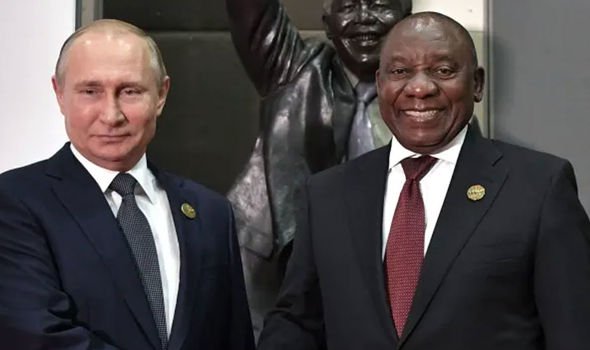
Russia Turns on the Charm at First Africa Summit
Date & time :
Saturday, 26 October 2019
Henry Fay
Russia offered nuclear power plants, fighter jets and missile defence systems to African countries in a charm offensive designed to win back influence on the continent, at a summit low on concrete trade and investment deals but high on congeniality. The Kremlin says $12.5bn worth of deals were struck during the first ever Russia-Africa Summit, however the majority were memorandums of understanding that may not result in any investment. “Let’s drink to the success of our joint efforts to develop full-scale mutually beneficial co-operation, wellbeing, peaceful future and prosperity of our countries and people,” Russian president Vladimir Putin said in a toast at the formal summit dinner in the Black Sea resort of Sochi. For all the warm rhetoric, however, the lack of fully formed deals underscored the gulf in financial firepower between Moscow and Beijing, which last year offered $60bn in financing to African states to fund trade. The bulk of the agreements discussed revolved around expanding already existing arms deals, a factor that has meant the bilateral trade relationship is heavily unbalanced in favour of Russian exports to Africa. In a symbolic gesture, Moscow flew two Tupolev Tu-160 nuclear bombers to South Africa as the summit opened, the first time the aircraft had landed on African soil. At a business forum attached to the summit, African leaders picked up assault rifles from a stand managed by Russia’s defence export agency, while others lingered near racks of grenade launchers. “The number one [issue] is defence and security,” Yoweri Museveni, Uganda’s president, told Mr Putin at their bilateral meeting. “We have been co-operating very well, we have supported the building of our army by buying good Russian equipment, aircraft, tanks, and so on. We want to buy more,” he said, suggesting that Moscow provide loans to speed up arms purchases. Russia has defence orders worth $14bn from African countries, its state-run arms export agency said at the summit. Sales to the continent account for about a third of Moscow’s military exports. Mr Putin said Russia had agreed “military technical co-operation agreements” with more than 30 African states, to supply weapons. “Some of these deliveries are free of charge,” he added. Elina Ribakova, deputy chief economist at the Institute of International Finance, described Russia’s offerings as “no strings attached”. The event drew 43 heads of state and government in a geopolitical coup for Mr Putin, as Moscow seeks to rebuild ties with the continent amid souring relations with the west. The summit’s declaration document contained a thinly veiled jibe at the US, with participants agreeing to “counteract political dictatorship and currency blackmail in the course of international trade and economic cooperation”. Russia and some African states are under US sanctions, which Moscow has condemned as unfair trade practices by Washington. While the Soviet Union was a close partner with many African states during the cold war, Russia’s current bilateral trade of $20bn is just a tenth of China’s, and relies heavily on exports of arms and grain to a handful of richer states.
Mr Putin promised to double trade within the next “four to five years”, and used a marathon schedule of back-to-back bilateral meetings with visiting delegations on both days of the summit to offer deals on everything from diamond mining to pork exports — though few have yet materialised. The Kremlin’s aim is to use military and trade ties to reinsert itself as a geopolitical powerbroker on the continent. At the summit, it hosted talks between the leaders of Ethiopia and Egypt who have clashed over a dam on the River Nile. Russian officials held back-to-back meetings with senior representatives of Libya’s rival governments. Dmitry Peskov, Kremlin spokesman, said Mr Putin was ready to help mediate “if the sides need this assistance to deal with their concerns”.
Russian oil company Lukoil signed a memorandum for drilling rights in Equatorial Guinea and Nigeria, while state-run atomic energy group Rosatom inked a preliminary agreement to build a nuclear power plant in Ethiopia. It also agreed to begin construction on an Egyptian reactor next year.
“It is not just politics. For us it has been pure business: two days of meetings and building relationships,” Andrey Guryev, chief executive of Russian fertiliser producer Phosagro, told the Financial Times.
The company is opening an office in South Africa and expects to increase sales in Africa by two to three times in the next five years. Its exports to the continent in the first nine months of the year were 37 per cent higher than in the same period in 2018.
But there was little discernible progress on efforts by African states to address the large imbalance in trade between Russia and the continent. Russian imports from Africa account for just 15 per cent of bilateral shipments.
“The trade turnover is growing; it is not as fast as Russian economic entities and African businesses wish, but it still exists,” Andrei Kemarsky, director of the Russian foreign ministry’s Africa department, told Interfax.
Source; Financial Times