Subscripe to be the first to know about our updates!
Can ASEAN Help Solve Myanmar’s Domestic Political Crisis?
Date & time :
Sunday, 14 February 2021
Netral
In the early hours of February 1, 2021, the tanks rolled across Yangon and Nay Pyi Daw, Myanmar’s main cities, as troops scattered everywhere to block roads and traffic, while communication and television lines were cut off. The military junta has declared a year of state of emergency following the national elections held on November 8, 2020 with the thin accusation of fraud that Aung San Suu Kyi’s National League for Democracy (NLD) won a major victory against the military-backed. the opposition party, the Solidarity and Union Development Party (USDP). State Councilor Aung San Suu Kyi and other members of the NLD have been detained while all power has been transferred to military leaders and former general Myint Swe has been declared the acting president.
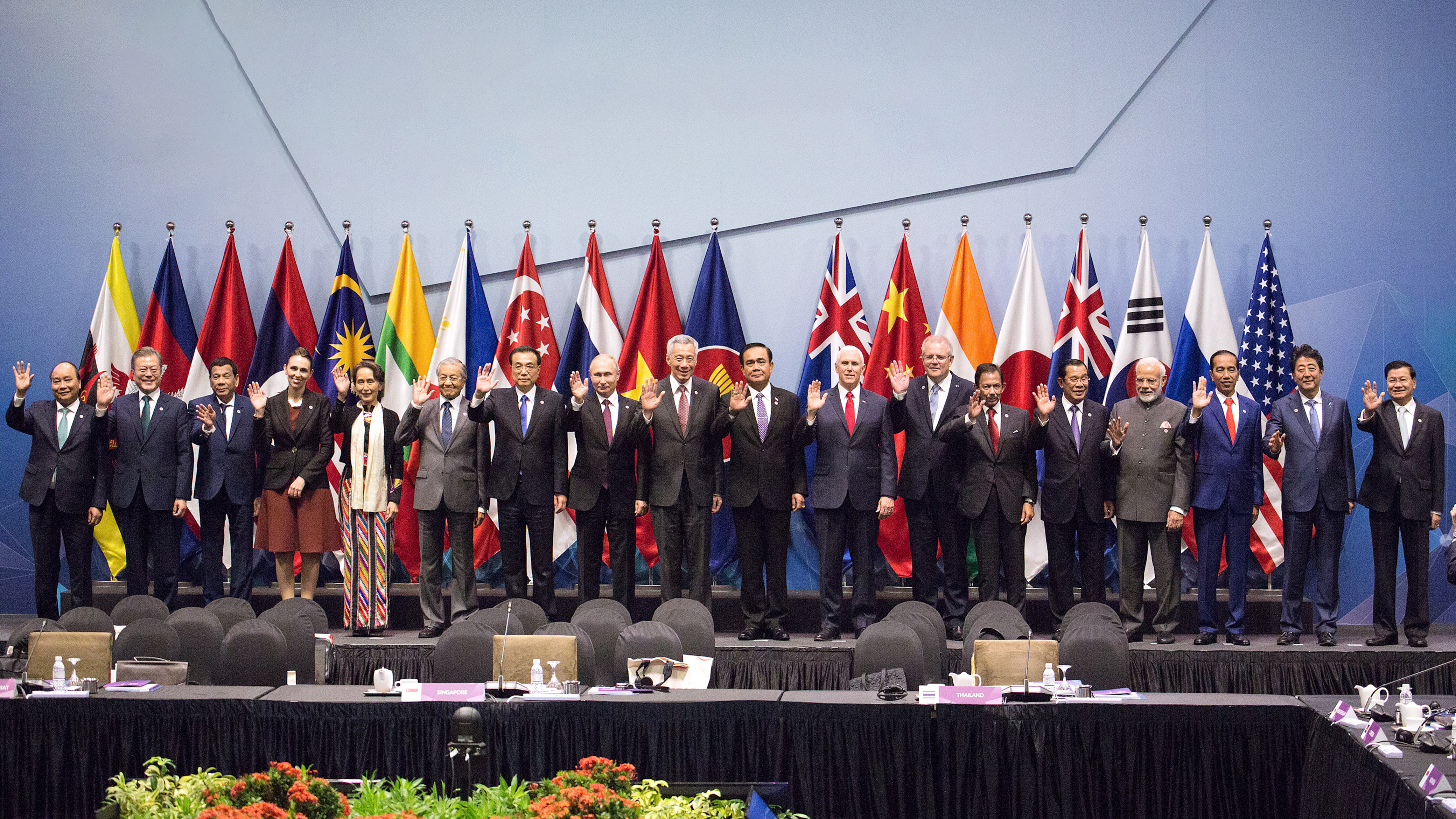
As Myanmar is a member of the Association of Southeast Asian Nations (ASEAN), its domestic political crisis extends beyond its physical boundaries to ASEAN as a regional institution. Since the formation of ASEAN in 1967, non-interference and consensus have been the basic framework for cooperation which has been dubbed the “ASEAN Way”. It has been praised as an efficient and face-saving approach based on personal ties not exercised publicly. This is based on a subjective understanding that each member has sufficient ability and strength to deal with each other’s internal problems.
However, the “ASEAN Way” is viewed differently by current state leaders in Southeast Asia. Some further state that one cannot express opinions on domestic matters of other countries, whereas countries other than ASEAN members can explicitly express opinions on such matters. For example, the Myanmar military coup has been criticized by the US, Australia, Japan and other Western countries. Visibly, 15 members of the United Nations Security Council also issued a statement calling for “continued support for democratic transition in Myanmar” and “immediate release” of all prisoners. On the other hand, ASEAN as a regional institution, some of its members refrain from expressing their views regarding the military coup except Malaysia and Indonesia which are the founders of ASEAN and have the best democracy among ASEAN members. Brunei also shows concern because it is currently the chair of ASEAN.
ASEAN can advocate for Myanmar to respect human rights and democracy as it did in the early stages of democratization in the country. For example the problem of the democratization process in 2003, the attack on Aung San Suu Kyi and his supporters against his convoy which resulted in the deaths of 70 people associated with the NLD when Suu Kyi was arrested. Responding to this, ASEAN members encouraged Myanmar to relinquish its role as chair of the 2006 ASEAN Ministerial Meeting (AMM) to the next-line Philippines, the following year, ASEAN ministers made a statement regarding concerns about the use of military armed force to crack down. at a Buddhist monk demonstration. ASEAN urges Myanmar to exercise restraint and seek political solutions through national conciliation and a democratization process rather than freezing its membership or expelling it from ASEAN. To restore its image internationally, Myanmar allows more freedom of expression, as in 2011 civil society and freedom of expression were allowed in Myanmar when a civilian leader supported by the military came to power, Thein Sein. He was given the opportunity to become chairman of ASEAN in 2013 in line with the reforms and political progress that had been achieved in Myanmar.
It is in the current situation of Myanmar, that the military junta staged a coup against Suu Kyi while handing all power over to military leaders. This shows that ASEAN’s failure to maintain the democratization process can at least have a negative impact on ASEAN as a whole. First, the backwardness of democracy and human rights which were coupled with the 2008 ASEAN charter. The emergence of a military leader through a military coup could have a spill-over effect on other ASEAN members to gamble that there is nothing more serious than a wave of curses in the days and weeks to come. As Sebastian Strangio argues, the Myanmar military coup could be a consequence of the absence of an effective and timely response to the military coup in neighboring Thailand in 2019. This could lead to possible military coups in other countries in Southeast Asia where the the legal leader can be overthrown. easily without military support. Second, the failure of the democratization process among its members, particularly Myanmar, appears to be an initiative that prevents ASEAN from deepening its cooperation to become a regional institution like the European Union. Thus, this project remains an elite project. While the democratization process is still a problem, authoritarian leaders in ASEAN will try to use sovereignty as a pretext to prevent others from expressing their opinion on domestic issues. Thus, democratization in each member will play an important role so that citizens can have a voice in ASEAN when political institutions are democratic. Third, in the status quo, ASEAN has played an important role in bringing together many countries, including the US, China, India, Australia, Japan and other key players. However, despite intense competition between China and the US, ASEAN is vulnerable to the foreign policies of its members. Some democratic countries will move towards the US and Western countries while some authoritarian regimes will embrace China because of their lack of focus on human rights and democracy. For example, although Thailand is an ally of the US, in recent years it has shown a tendency towards moving toward China after the 2019 military coup. In 2019, Thailand signed an agreement with China to buy Chinese weapons including submarines, anti-ship cruise missiles and amphibious ships.
In this regard, ASEAN must pay more attention to issues of democracy and human rights in the region, particularly the current political issue of Myanmar. The principles of ASEAN and ASEAN Ways can still be adhered to by encouraging Myanmar to carry out national conciliation with regard to the Myanmar national constitution and the ASEAN Charter in 2008. The Chair of ASEAN, Brunei Darussalam, must take the lead in helping to stabilize political problems in Myanmar as in 2008 where it happened. border dispute between Cambodia and Thailand. At that time, Indonesia was the seat and had taken the opportunity by providing a good office and encouraging Cambodia and Thailand to resolve problems through peaceful means rather than exchanging bullets.
About the Author: Sokvy Rim is a recent graduate from the Department of International Studies, Royal University of Phnom Penh. He is currently an intern at the Cambodian Education Forum and has an interest in foreign affairs in the Asia Pacific
Source; Netral